
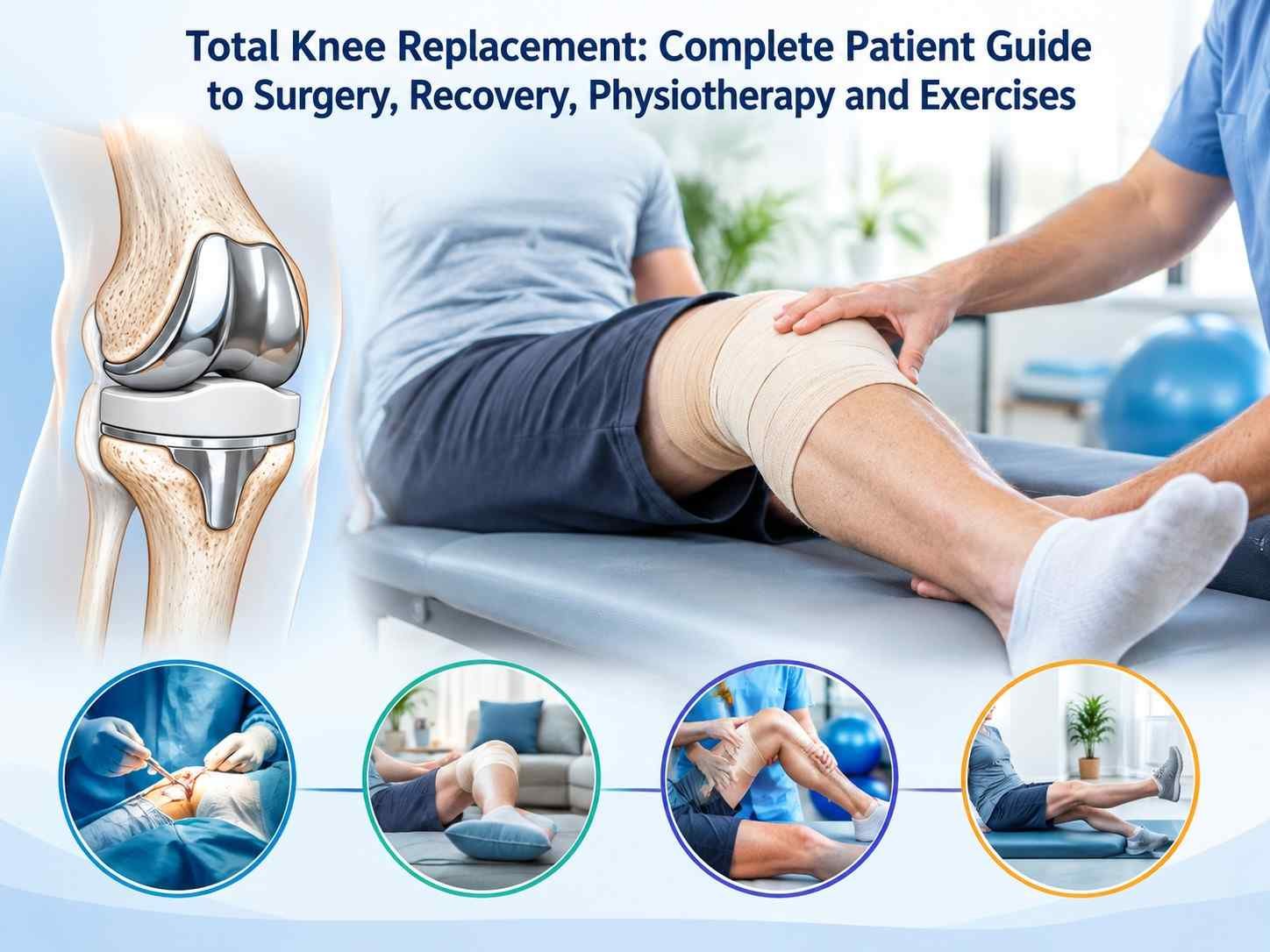
Total Knee Replacement: Complete Patient Guide to Surgery, Recovery, Physiotherapy and Exercises
Persistent knee pain can make walking, climbing stairs, or getting out of a chair difficult. When medicines, activity changes, and other treatments no longer provide enough relief, an orthopaedic surgeon may discuss total knee replacement. If you are exploring rehabilitation options, Knee Pain Physiotherapy in Delhi can help you understand how physiotherapy supports movement before and after surgery.
This guide explains the procedure, preparation, recovery, and exercises in clear language. It provides general information, not a substitute for advice from your surgeon or physiotherapist.
What Is Total Knee Replacement?
The term Total Knee Replacement (TKR) can also be described as Total Knee Arthroplasty (TKA). TKR is a surgical procedure involving the replacement of deteriorated joint surfaces with artificial components.
There are several conditions that may result in a person having to undergo a TKR. One of such diseases is osteoarthritis. Osteoarthritis is a condition associated with wearing out of the cartilage, which serves as a protective layer of the knee joint. Its symptoms may include pain, stiffness, swelling, and mobility difficulties.
Also read : Why Does Lower Back Pain Get Worse After Sitting for Long Hours?
Who May Need Knee Replacement Surgery?
The decision to move on with a total knee replacement takes into consideration your symptoms, the findings from your physical examination, imaging studies, your general well-being, and your goals.
You may discuss this treatment option if you experience:
- Severe knee pain while walking, standing, or resting.
- Stiffness that limits everyday activities.
- Persistent swelling or changes in knee alignment.
- Sleep difficulties caused by knee discomfort.
- Limited improvement from appropriate non-surgical treatments.
The information from your X-rays cannot tell your surgeon if a total knee replacement is necessary for you. The X-rays are considered along with other considerations to make an appropriate treatment plan for you.
How to Prepare for Surgery
Planning properly will assist you to adjust to being back at home. Before going into the procedure for total knee replacement, consult your surgical team regarding issues such as medication, fasting, wound care, managing pain and prevention of blood clots. Be sure to provide all details about your health problems, allergies, medicines and any other supplements you take.
Also make all adjustments to your house through removal of obstacles, removal of loose carpets and ensuring that all your items are accessible.
What Happens During the Procedure?
The surgical procedure wherein the doctors apply anaesthesia in order to deal with the pain is total knee replacement. The doctor prepares the surface of the joint and implants the artificial joint consisting of the metallic and artificial components into it. Different methods can be applied depending on the patient’s needs.
After the surgery has been done, the health professionals will take care of you and help to move around. Lots of people can walk already after the surgery.
Understanding Your Recovery Timeline
The post-operation period following TKR operation differs from person to person. While most people begin performing many daily routines a few weeks after the procedure, some may require a few months before their improvement occurs. Age, general health condition, mobility prior to surgery and physical therapy all affect this process.
In the early stage, you are likely to need a walking stick or crutches. Your medical team will give you the details about the amount of weight you can put on your leg and the time to switch the devices. Be sure to follow the directions related to the care of your wound, medications, swelling, and other aspects.
Under which circumstances will you go and see the doctor? Contact the specialists who conducted the procedure in case you notice any of the symptoms of infection such as extra redness of the wound, abnormal discharge, fever, pain, or swelling of the calf. Pain in the chest and difficulty breathing are emergencies.
Why Physiotherapy Matters After Surgery
Knee replacement physiotherapy will help with restoring mobility, strengthening muscles, gaining balance and walking ability. You should know that the physiotherapist evaluates your progress and modifies the exercise program according to your recovery stage. It means that there is no forcing but gradual improvement of the knee joint functionality.
Phywell’s Physiotherapy services will help you plan the rehabilitation process according to the recommendations of your doctor. If traveling is difficult for you after the surgery, then you might consider Physiotherapy at Home in Delhi.
Knee Pain Physiotherapy in Delhi may also be considered before the surgery if it is recommended by the doctor in order to strengthen muscles and gain proper movement skills. After the surgery, Phywell Physiotherapy can help you perform the required exercises.
Exercises After Knee Replacement Surgery
The doctor or physiotherapist must determine the appropriate exercises and timing thereof. These may include:
- Ankle pumps: Gently move your feet up and down to encourage circulation.
- Thigh tightening: Tighten the front thigh muscles while keeping your leg supported.
- Heel slides: Slowly slide your heel towards you to bend the knee within the advised range.
- Knee straightening: Practise straightening the knee gently as instructed.
- Supported walking: Take short, safe walks using your prescribed walking aid.
It is not the exercise regimen designed specifically for you. If you notice any pain, swelling or any other symptoms, you should discontinue the exercise and consult your health care practitioner. Do not attempt to change the resistance level or squat deeply without the approval of your physiotherapist.
When you get used to the exercise, the physiotherapist will be able to design the program for you.
Risks and Long-Term Care
Like any major surgical process, there are some possible risks in the knee replacement procedure. These include infection, blood clots, stiffness, pain, mechanical failure, and other risks caused by general health issues or anesthesia. You can talk about your risks and their possible minimization with your orthopedic surgeon.
It seems to be obvious that after the procedure you are going to feel better, but you will never have your own knee again. Follow all instructions of your doctors and do your exercises.
Conclusion
Tkr is an effective way to alleviate pain and enhance functionality, however, there is much more that goes into making the whole process successful. It includes proper preparation, wound care, follow-ups and physical therapy. You need to consult with your orthopedic doctor on what your goals are, and then proceed accordingly.
For help in rehabilitation, please Contact Phywell Physiotherapy to discuss your requirements.




Leave a Reply