
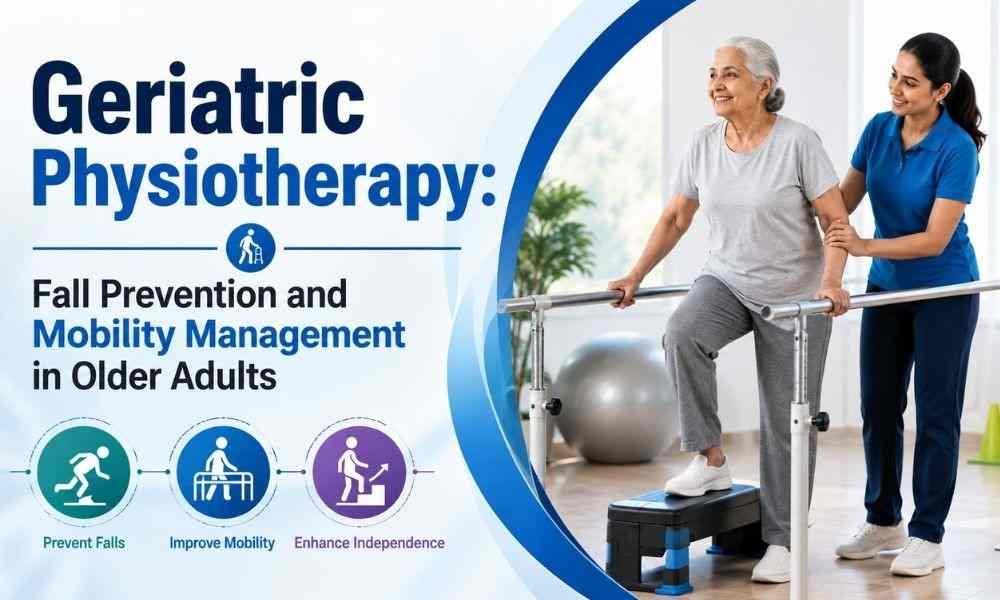
Geriatric Physiotherapy: Fall Prevention and Mobility Management in Older Adults
Phywell Physiotherapy Team2026-08-20T11:18:44+00:00A fall can happen in a surprisingly ordinary moment. Someone gets up from the sofa, turns toward the kitchen, catches a foot on the edge of a rug, and suddenly the whole family is worried. For an older adult, the bigger problem may not always be the fall itself. It can be the hesitation that follows: What if I fall again?
This is where geriatric physiotherapy for fall prevention can make a meaningful difference. The aim is not to tell older people to stop moving. It is to help them move more safely, build strength, improve balance, and regain confidence.
For families searching for the Best physiotherapy centre in Delhi, Phywell Physiotherapy in Shalimar Bagh offers individualized physiotherapy and home physiotherapy in Delhi. Its approach focuses on the person’s condition, lifestyle, comfort, mobility, and recovery goals rather than putting everyone through the same exercise routine.
Falls are a significant health concern among older adults. The World Health Organization identifies falls as an important cause of injury worldwide, particularly among older people. Current international guidance also supports person-centred fall prevention that considers an individual’s specific risks rather than relying on a single intervention.
Why Do Falls Become More Common With Age?
Getting older does not automatically mean becoming weak or unsteady. However, several age-related changes can make everyday movement more challenging.
Muscle strength may decline. Reaction times can become slower. Joint stiffness may affect flexibility. Vision, sensation, or the body’s sense of position, known as proprioception, may also change. Some people develop conditions such as sarcopenia, frailty syndrome, osteoporosis, or vestibular problems that can further affect movement and stability.
Then there are everyday situations. A rushed turn, wet bathroom floor, poorly placed furniture, unsuitable footwear, or simply trying to walk while carrying something can turn a small movement problem into a fall.
This is why elderly physiotherapy, senior physiotherapy, and physiotherapy for seniors should look at the whole person. A good assessment asks not only, Did you fall? but also, why might you be struggling to move safely?
What Does Geriatric Physiotherapy Actually Do?
Think of geriatric rehabilitation as practical training for everyday life.
A physiotherapist may work on strength, balance, flexibility, walking, posture, coordination, and functional movement. The programme can include balance training for older adults, strength training for older adults, gait training for elderly people, functional mobility training, and carefully selected exercises.
The World Health Organization’s guidance supports multicomponent physical activity that includes balance, strength, gait, and functional training for older adults. Its falls-prevention guidance also highlights tailored exercise programmes as an important intervention.
The important word here is tailored.
An 80-year-old who walks independently but feels unsteady on stairs does not need exactly the same programme as someone recovering from an injury and using a walking aid. Good physiotherapy recognizes that difference.
Balance Training Is About More Than Standing on One Leg
Balance sounds simple until you actually have to use it while turning, reaching, stepping over something, or getting out of a chair.
Balance and coordination exercises can train the body to respond more effectively to these situations. A physiotherapist may use controlled weight shifting, stepping activities, reaching exercises, turning practice, and other movements that challenge balance safely.
For some people, vestibular rehabilitation may also be relevant when dizziness or problems involving the inner ear contribute to balance difficulties.
The goal is practical: better balance, improved coordination, greater stability, and more confidence in movement.
Strength Makes Everyday Movement Easier
Strong muscles are useful for much more than exercise sessions.
Consider getting out of a low chair. Walking uphill. Climbing stairs. Standing after sitting for a while. Recovering your balance after taking an unexpected step.
These ordinary movements require strength.
Resistance training, functional training, neuromuscular training, and carefully prescribed strengthening exercises can help older adults work on these abilities. The programme should match the person’s current strength and functional capacity and should progress gradually.
The WHO notes that physical activity can help maintain physical function and reduce age-related loss of physical capacity.
Walking Skills Matter Too
Sometimes the problem is not that a person cannot walk. It is that walking has quietly become less secure.
Perhaps the steps have become shorter. Perhaps the person avoids turning quickly. Maybe they hold onto walls or furniture without realizing how often they do it.
Gait analysis and gait training for elderly patients can help identify these patterns. Treatment may include walking practice, turning, changing direction, navigating obstacles, and learning safe walking techniques for seniors.
If appropriate, a physiotherapist can also assess whether assistive devices or walking aids could provide additional support.
Using a walking aid is not a sign of failure. The right aid, used correctly, can sometimes provide exactly the reassurance someone needs to remain active.
How Is Fall Risk Assessed?
Before choosing exercises, a physiotherapist may perform a fall risk assessment.
This can involve questions about previous falls, dizziness, walking difficulties, physical activity, medications, daily activities, and confidence while moving. The therapist may also assess strength, balance, gait, transfers, posture, and functional mobility.
Several recognized assessment tools can support this process.
The Timed Up and Go Test (TUG) looks at functional mobility. The 30-Second Chair Stand Test gives information about lower-limb strength and endurance, while the 4-Stage Balance Test examines progressively more difficult standing positions. These tests form part of the CDC’s STEADI approach to fall-risk assessment.
Depending on the situation, clinicians may also use the Berg Balance Scale, Functional Reach Test, Short Physical Performance Battery, Tinetti Performance Oriented Mobility Assessment, Activities-specific Balance Confidence Scale, Mini-BESTest, or Six-Minute Walk Test.
These tools do not replace clinical judgment. They simply give professionals useful information that can help measure progress and identify areas that need attention.
What Does Geriatric Physiotherapy for Fall Prevention Look Like?
There is no magic exercise that guarantees nobody will ever fall. If someone promises that, you can politely raise one eyebrow.
Effective fall prevention therapy is usually more sensible than dramatic. It combines several areas according to the person’s needs.
Strength, Balance and Functional Exercise
A programme may include elderly rehabilitation exercises, resistance training, balance work, flexibility exercises, aerobic exercise, and functional movements.
The focus should remain on movements that support real life. Standing, walking, turning, reaching, climbing steps, and transferring from one surface to another are often more relevant than performing an impressive-looking exercise that has little connection to daily activities.
Home Exercises for Elderly Mobility
Not every older adult can visit a clinic several times a week.
For people with limited mobility, home-based rehabilitation can make physiotherapy more practical. A physiotherapist may prescribe home exercises for elderly mobility that can be performed safely within the person’s available space and ability.
Home rehabilitation can also help therapists understand the environment in which a person actually moves. A clinical exercise may look perfectly safe in a treatment room but feel completely different beside a staircase or in a narrow hallway at home.
Confidence and Fear Reduction
A previous fall can change behaviour.
Someone who once enjoyed evening walks may stop going outside. Someone who used to climb stairs may start avoiding them. Less activity can gradually reduce strength and mobility, creating a difficult cycle.
Well-planned senior mobility training can help break that cycle. Small, achievable improvements can provide reassurance and encourage participation.
The aim is not reckless confidence. It is informed confidence, knowing what your body can do, understanding where you need support, and learning how to move safely.
Fall Prevention Is Not Only About Exercise
Exercise is important, but falls can have many causes.
The CDC’s STEADI resources include assessment of gait, strength, balance, orthostatic blood pressure, medications, and other factors associated with fall risk.
Home safety matters too. Loose rugs, poor lighting, cluttered walkways, unsuitable footwear, and difficult bathroom arrangements can create unnecessary hazards.
Health conditions deserve attention as well. Osteoporosis may increase the consequences of a fall because fractures can be more likely. Problems associated with postural hypotension can contribute to dizziness and instability. Medication-related risks may also need review by the appropriate healthcare professional.
The World Falls Guidelines recommend a comprehensive, multifactorial assessment for older adults considered at high risk, followed by personalized interventions.
That person-centred approach is important because fall prevention should fit the individual’s life, not the other way around.
Choosing the Right Physiotherapy Support
When families search for the Best physiotherapy centre in Delhi, they should look beyond a catchy title.
Ask whether the clinic provides proper assessment, individualized exercise prescription, progress monitoring, and appropriate guidance for home care. Experience with older adults and a willingness to explain the treatment plan clearly also matter.
At Phywell Physiotherapy, the focus is on personalized care for musculoskeletal concerns, mobility limitations, pain, and post-injury recovery. Located in Shalimar Bagh, the centre provides both clinic and home physiotherapy in Delhi.
Its broader services include rehabilitation for conditions involving the neck, back, shoulder, knee, ACL, sciatica, and other musculoskeletal concerns, along with chiropractic care and laser therapy.
For someone searching for the Best Chiropractor in Delhi, the same principle applies: the right professional should first understand the person’s condition and goals before recommending a treatment approach.
When Should an Older Adult Get Help?
If an older person has stumbled, fallen over, has trouble walking, gets up from a chair, has no idea why it is happening or is scared to move because of that, a professional may do a fall risk assessment.
A person’s change in mobility is not always a sign they need intensive treatment. Sometimes just a few small changes in environment and an appropriate exercise regimen can provide some assistance. Other times, the individual could require comprehensive mobility rehabilitation or be referred to a different type of healthcare professional.
Weakness, fainting spells, bad vertigo, acute pain, or an injury resulting from a fall are medical conditions that should be taken seriously and not dismissed simply due to one’s old age.
The Real Goal: Staying Independent
Better balance does not equal the major physical benefit of elderly physiotherapy for fall prevention. Standing up from a chair, even a low one, without hesitation is a great sign
Getting around at night without stumbling or crashing is another good indicator Visiting family, doing the grocery shopping, and doing your morning walk without fear of a fall is also a sign of getting your mobility back
You feel you can move around the house confidently without the slightest fear of a fall. It can all be summed up by being able to have full independence from day to day without having to rely on support.
Older adults can be helped by the right kind of therapy for fallincluding exercising, balance exercises, mobility and gait exercises, strength training, and other preventive strategies to move safely and get involved more with daily life activities. In Phywell Physiotherapy clinic, the main goal is the improvement that suits every individual client. Our main aim is not just to increase the time spent on doing exercises, but to bring out better ways of moving, to make your life more pleasant and safer and, above all, to let you know that the passing of time no longer defines the limits of your abilities.
Ready to Take the Next Step Toward Safer Mobility?
If you or a loved one is experiencing balance problems, walking difficulties, weakness, or fear of falling, professional physiotherapy can help identify the underlying movement challenges and create a personalized plan for safer mobility.
At Phywell Physiotherapy, Shalimar Bagh, our physiotherapy team focuses on individualized care designed around your condition, lifestyle, and recovery goals. From balance training and strength exercises to gait training and mobility rehabilitation, every programme is planned according to your needs.
Don’t let fear of falling limit your independence. Take the first step toward better balance, greater confidence, and safer everyday movement.
Contact Phywell Physiotherapy today to discuss your physiotherapy needs and find out whether a personalized fall-prevention programme is right for you.








Leave a Reply