
Affordable Home Physiotherapy in Delhi for Comfortable Recovery
Recovering from pain, injury, surgery, or reduced mobility can be challenging when travelling to a clinic is uncomfortable or difficult. Home-based care offers a practical alternative by bringing professional guidance into a familiar environment. Phywell Physiotherapy provides personalised rehabilitation support for individuals who need convenient, structured care without compromising on clinical attention.
Our approach to home physiotherapy in Delhi focuses on understanding the patient’s condition, daily routine, movement limitations, and recovery goals. Whether you need support after surgery, help managing persistent pain, or assistance improving mobility, treatment is planned according to your individual requirements.
For patients searching for best physiotherapy in Delhi, it is important to consider the therapist’s qualifications, assessment process, treatment approach, and ability to provide consistent follow-up care. A convenient home visit should also be supported by professional assessment and an appropriate rehabilitation plan.
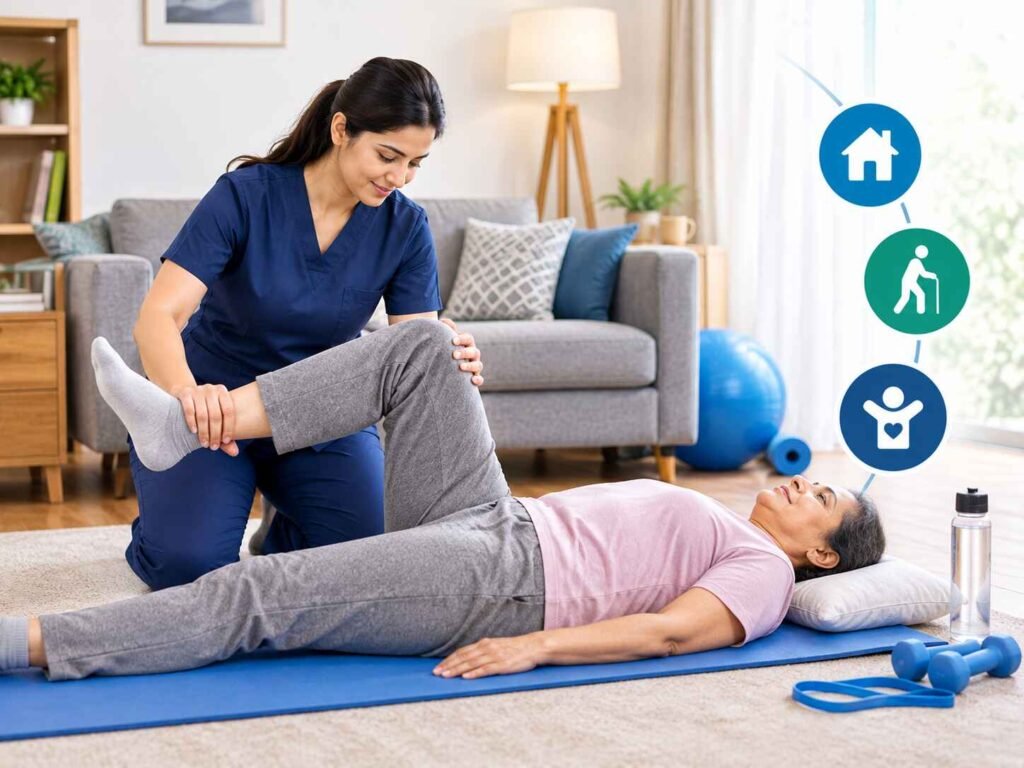
Physiotherapy at Home in Delhi for Comfortable Care
Physiotherapy at home in Delhi can be particularly helpful for people who find regular clinic visits difficult. Treatment takes place in the patient’s home, allowing the physiotherapist to understand movement challenges in the environment where daily activities actually happen.
During an initial consultation, the physiotherapist may review pain levels, posture, flexibility, muscle strength, balance, range of motion, and functional limitations. Depending on the condition, the treatment plan may include therapeutic exercises, manual therapy, stretching exercises, strengthening exercises, and movement education.
The objective is not simply to reduce discomfort temporarily. A well-planned rehabilitation programme aims to improve movement quality, support physical recovery, and help patients become more confident with everyday activities.
Who Can Benefit from Home Physiotherapy?
Home-based physiotherapy may be suitable for people experiencing:
- Back pain, neck pain, or posture-related discomfort
- Joint stiffness and movement restrictions
- Recovery after orthopaedic or other surgeries
- Sports injuries requiring guided rehabilitation
- Age-related weakness and mobility difficulties
- Neurological conditions affecting movement or balance
- Muscle weakness after prolonged rest or hospitalisation
- Difficulty travelling because of pain, weakness, or reduced mobility
A professional assessment helps determine whether home treatment is appropriate and whether additional medical evaluation is needed.
Home Physiotherapy in Shalimar Bagh for Local Patients
For residents looking for home physiotherapy in Shalimar Bagh, receiving care at home can make rehabilitation more manageable. Patients may benefit from treatment that fits around their household responsibilities, work schedule, and recovery needs.
Home visits can also be useful for individuals who need assistance with safe movement inside their homes. A physiotherapist may observe how a patient sits, stands, walks, uses stairs, or performs other routine activities. This information can help guide practical exercises and recommendations.
Phywell Physiotherapy serves patients seeking structured rehabilitation and movement support in Delhi. Treatment availability, visit coverage, and scheduling should be confirmed directly with the clinic before booking.
What Conditions Can Be Treated Through Home Physiotherapy?
Home physiotherapy in Delhi is not limited to one type of pain. Depending on the patient’s assessment and clinical requirements, treatment may support several areas of rehabilitation.
Physiotherapy for Back Pain at Home
Back pain may be associated with muscular strain, poor posture, reduced flexibility, prolonged sitting, or other musculoskeletal issues. Physiotherapy for back pain at home may include posture education, mobility exercises, core strengthening, and guidance on safer movement patterns.
The treatment plan depends on the cause and severity of pain. Patients with sudden severe pain, significant weakness, or other concerning symptoms may require medical evaluation before beginning routine exercises.
Physiotherapy for Joint Pain
Joint pain involving the knee, hip, shoulder, ankle, or other areas can affect walking, lifting, climbing stairs, and daily independence. Physiotherapy for joint pain may focus on improving joint flexibility, strengthening surrounding muscles, reducing movement-related discomfort, and restoring functional ability.
Exercises are selected according to the joint involved, the patient’s condition, and their tolerance for movement.
Post-Surgery Physiotherapy at Home
After surgery, appropriate rehabilitation can support a gradual return to movement and daily activities. Post-surgery physiotherapy at home may be considered for patients who have been advised to begin rehabilitation and are medically stable for home-based treatment.
The programme may include prescribed mobility exercises, strengthening, movement retraining, and education on precautions. The pace of recovery varies according to the procedure, healing progress, and medical guidance.
Senior Citizen Physiotherapy at Home
Older adults may experience reduced muscle strength, joint stiffness, balance difficulties, or mobility limitations. Senior citizen physiotherapy at home can provide guided exercises in a familiar setting, with attention to safety and functional independence.
Treatment may focus on walking confidence, balance and coordination, lower-limb strength, flexibility, and everyday movement. Where necessary, the physiotherapist may also identify environmental factors that could increase the risk of falls.
Sports Injury Rehabilitation at Home
Sports injuries often require a gradual progression from pain management to movement restoration and performance-related conditioning. Sports injury rehabilitation at home may be suitable during selected stages of recovery, depending on the injury and the athlete’s needs.
Rehabilitation may include mobility work, strengthening, balance training, movement control, and sport-specific progression when clinically appropriate. Patients recovering from ligament injuries, including ACL-related conditions, may require a structured programme coordinated with their medical team.
For individuals specifically seeking an ACL rehabilitation centre in Delhi, a clinic-based assessment may be necessary when the rehabilitation programme requires specialised equipment, advanced testing, or supervised progression beyond what can be performed at home.
Neurological and Orthopedic Rehabilitation
Neurological physiotherapy at home may support individuals with movement limitations associated with certain neurological conditions. Treatment can focus on balance, coordination, transfers, walking practice, and functional movement, based on the patient’s condition and medical advice.
Similarly, orthopedic physiotherapy at home may assist with recovery from musculoskeletal injuries, joint problems, fractures, or post-operative limitations. The programme is adjusted to the patient’s symptoms, healing stage, and functional goals.
Home-Based Rehabilitation Services at Phywell Physiotherapy
Home-based rehabilitation is most effective when it is organised around measurable goals rather than isolated exercises. At Phywell Physiotherapy, the treatment approach is designed to connect clinical assessment with practical improvements in daily life.
A typical home rehabilitation process may include:
Stage | What It May Include |
Initial assessment | Review of symptoms, medical history, mobility, strength, and functional limitations |
Treatment planning | Selection of suitable exercises and treatment techniques based on individual needs |
Guided sessions | Therapeutic exercise, manual therapy, mobility training, or other appropriate interventions |
Home exercise guidance | Instructions for safe exercises and activity management between sessions |
Progress review | Monitoring changes in pain, movement, strength, flexibility, and daily function |
Ongoing adjustment | Modifying the programme as recovery progresses or needs change |
This process supports a more consistent approach to rehabilitation while helping patients understand their role in recovery.
Why Choose Phywell Physiotherapy for Home Care?
Choosing a home physiotherapy provider involves more than selecting a nearby service. Patients should look for qualified professionals, clear communication, appropriate treatment planning, and realistic explanations about recovery.
Phywell Physiotherapy brings experience in physiotherapy, chiropractic care, and rehabilitation. Its lead specialist, Dr. Shivam Tiwari, has qualifications including Bachelor of Physiotherapy and Master of Physiotherapy, along with specialised training in osteopathy, chiropractic care, and manual therapy.
The clinic’s rehabilitation approach includes attention to pain management, functional movement, strengthening, and patient education. Treatment recommendations are based on the patient’s condition and goals rather than a one-size-fits-all routine.
Physiotherapy at Home Near Me: What Should You Expect?
When one looks for Physiotherapy at home near me, then there comes the question regarding what actually takes place during a home visit. The procedure differs from case to case, but it usually starts off with a discussion on the patient’s symptoms and medical history, along with a test of physical movement and functionality.
Physiotherapy at home in Delhi may consist of various elements such as exercise demonstrations, manual therapy, mobility and activity management instructions. Patients should speak freely of their pain, fatigue, dizziness or discomfort during physiotherapy sessions.
Home physiotherapy is not a substitute for medical treatment in emergencies. In the case of severe injury, sudden immobility, chest pain or trouble breathing, one must seek proper medical assistance, rather than waiting until the physiotherapy session.
Chiropractic Care and Physiotherapy: Understanding the Difference
Both physiotherapy and chiropractic therapy can be used for rehabilitation, but the methods and techniques employed can vary between the two. Physiotherapy usually centers on exercise and physical rehabilitation. Chiropractic care can employ various manual methods of therapy, depending on the qualifications of the practitioner and the patient’s problem.
The choice of treatments at Phywell Physiotherapy is determined individually according to the patient’s conditions and clinical needs. Any patient who wants to go for chiropractic treatment should make an appointment and explain his/her problems and treatment expectations.
Individuals who are looking for the best chiropractor in Delhi should consider the credentials, experience, communication style, and suitability of the suggested method of treatment.
Book Home Physiotherapy in Delhi
Where there is pain, weakness, stiffness, or mobility issues that make it difficult to attend clinic visits, home therapy might be an easy way for the patient to start getting professional treatment. In-home physiotherapy in Shalimar Bagh can be a great option for people in need of professional guidance and assistance to recover.
It would be a good idea for patients seeking in-home physiotherapy in Delhi to talk about their problem, check availability of such services, and find out about the suggested treatment method.
Phywell Physiotherapy provides physiotherapy and rehabilitation services designed around individual patient needs. Contact the clinic to enquire about home physiotherapy in Delhi and available home visits.
