
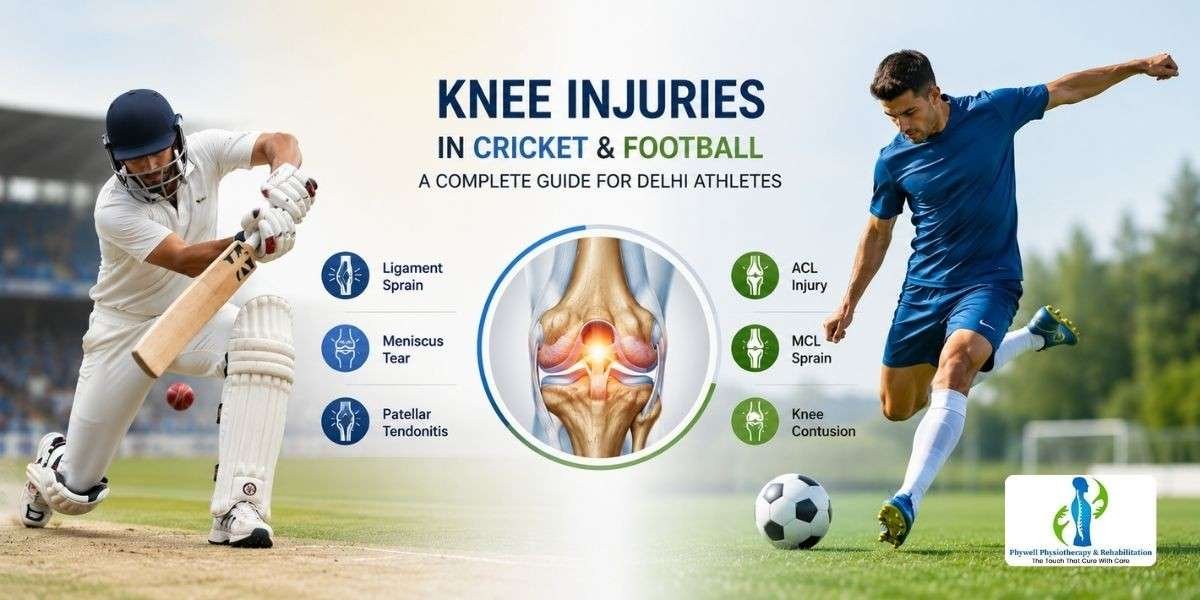
Cricket and Football Knee Injuries: A Complete Guide for Delhi Athletes
A fast sprint, a sudden turn, an awkward landing, or a powerful shot can sometimes put a player on the sidelines instead of the scoreboard. For cricket and football players, the knees handle constant pressure from running, jumping, stopping, and changing direction. This is why Cricket and Football Knee Injuries are among the most common sports-related problems faced by athletes.
Whether you are a professional player, a college athlete, or someone who enjoys weekend matches, ignoring knee pain can affect your performance and confidence. If you are looking for the Best physiotherapy centre in Delhi for sports injury recovery, understanding the causes, symptoms, and rehabilitation process is the first step toward protecting your knees.
The good news is that many knee injuries can improve with proper assessment, structured rehabilitation, and the right approach to recovery.
Why Are Knee Injuries Common in Cricket and Football Players?
Cricket and football involve repeated high-impact movements. Players constantly accelerate, stop suddenly, jump, twist, and maintain balance while competing. These movements create stress on the knee joint.
Football players often experience injuries during quick direction changes, tackles, or sudden stops. Cricket players may develop knee problems from repeated bowling actions, fast running between wickets, jumping, or awkward fielding positions.
Common reasons behind sports knee injuries include:
- Sudden twisting movements
- Incorrect landing techniques
- Poor warm-up routines
- Muscle weakness or imbalance
- Overtraining without enough recovery
- Previous untreated injuries
Many athletes continue playing through discomfort because they do not want to miss matches. However, ignoring early warning signs can lead to worsening symptoms and reduced athletic performance.
Understanding the Knee Joint and Its Important Structures
To understand knee injuries, it helps to know how the knee works.
The Knee Joint connects three major bones:
- Femur – the thigh bone
- Tibia – the main shin bone
- Fibula – the smaller lower leg bone
- Patella – the kneecap
The knee also contains important supporting structures, including:
- Anterior Cruciate Ligament (ACL)
- Posterior Cruciate Ligament (PCL)
- Medial Collateral Ligament (MCL)
- Lateral Collateral Ligament (LCL)
- Meniscus
- Tendons
- Cartilage
- Muscles around the joint
These structures work together to provide stability, strength, and smooth movement. When one of these areas gets injured, athletes may experience pain, swelling, instability, or difficulty performing sports activities.
Most Common Cricket and Football Knee Injuries
ACL Tear and Ligament Injuries
An ACL tear is one of the most discussed injuries among athletes. The ACL helps control knee stability, especially during sudden movements and changes in direction.
ACL injuries commonly occur when a player:
- Changes direction quickly
- Lands incorrectly after jumping
- Stops suddenly while running
- Receives direct impact to the knee
Common ACL injury symptoms include:
- Sudden knee pain
- Swelling
- Feeling that the knee is unstable
- Difficulty continuing activity
Football players often experience ACL injuries because of frequent cutting and turning movements. Cricket players can also develop ligament injuries, especially during fielding and fast movements.
Meniscus Injuries
The meniscus acts as a cushion between the bones of the knee. A sudden twist or rotation can damage this cartilage.
Meniscus injuries may cause:
- Knee stiffness
- Pain during movement
- Swelling
- Difficulty bending or straightening the knee
Athletes with meniscus problems often notice discomfort while running, squatting, or changing direction.
MCL and PCL Injuries
The Medial Collateral Ligament (MCL) and Posterior Cruciate Ligament (PCL) also help maintain knee stability.
MCL injuries often happen because of impact from the outer side of the knee, while PCL injuries can occur due to forceful impact or excessive pressure on the knee.
Proper evaluation helps determine the severity and the right rehabilitation plan.
Knee Injury Symptoms Athletes Should Not Ignore
Many players initially ignore knee discomfort, thinking it will disappear after rest. Sometimes mild pain improves, but repeated symptoms need attention.
Common knee injury symptoms include:
- Sudden knee pain after playing
- Severe knee discomfort
- Swelling around the joint
- Painful movement
- Difficulty running
- Difficulty walking
- Limited mobility
- Feeling of knee instability
Some athletes also experience frustration after injury because they cannot perform at their previous level. The fear of missing matches or losing fitness can affect confidence.
Early assessment can help athletes understand the problem and return to activity safely.
Why Do Cricket and Football Players Get Knee Injuries?
The causes of knee injuries vary from player to player. Some injuries happen suddenly, while others develop gradually due to repeated stress.
Common knee injury causes include:
- Inadequate warm-up before playing
- Weak thigh and core muscles
- Poor movement technique
- Playing on unsuitable surfaces
- Increasing training intensity too quickly
- Not allowing enough recovery time
Athletes should focus on strength, flexibility, balance, and proper movement patterns to reduce injury risk.
Diagnosis of Sports Knee Injuries
A proper diagnosis helps identify the exact problem instead of treating only the pain.
A healthcare professional may evaluate:
- Knee movement
- Muscle strength
- Joint stability
- Previous injury history
- Sports activity level
In some cases, doctors may recommend imaging tests such as Magnetic Resonance Imaging (MRI) to examine soft tissues like ligaments, cartilage, and the meniscus.
An accurate assessment helps create a treatment plan based on the athlete’s condition.
Treatment and Rehabilitation for Knee Injuries
Treatment depends on the type and severity of the injury. Some athletes recover with rehabilitation, while serious injuries may require additional medical procedures.
Role of Physiotherapy in Knee Recovery
Sports physiotherapy plays an important role in helping athletes regain strength, mobility, and confidence.
A structured rehabilitation program may include:
- Knee rehabilitation exercises
- Strength training
- Mobility improvement
- Balance exercises
- Movement correction
- Return-to-sport training
Phywell Physiotherapy focuses on professional assessment and personalized rehabilitation programs designed according to an individual’s injury condition and recovery goals.
For athletes dealing with knee problems, proper guidance can help improve movement quality and support a safer return to sports.
Knee Pain Physiotherapy for Athletes
Athletes who have knee pain that does not go away should see a doctor of playing through the pain.
They can get help like Knee pain physiotherapy in Shalimar Bagh.
This type of physiotherapy helps athletes understand what is wrong, with their knee and follow a plan to get better.
Knee pain physiotherapy does not just help with the pain it also helps athletes get stronger. Prevents them from getting hurt again.
How Athletes Can Prevent Knee Injuries
Prevention is always better than spending months away from the game.
Athletes can protect their knees by:
- Performing proper warm-up exercises
- Strengthening leg muscles
- Improving flexibility
- Using correct playing techniques
- Wearing suitable sports footwear
- Taking adequate recovery breaks
A strong and balanced body helps athletes handle the physical demands of cricket and football.
When Should Delhi Athletes Consult a Physiotherapist?
Players should seek professional advice if they experience:
- Persistent knee pain
- Repeated swelling
- Difficulty running or walking
- Knee instability
- Problems returning to sports
Choosing the right professional support matters for long-term recovery. Athletes searching for a physiotherapy centre should consider clinics that provide proper assessment, rehabilitation planning, and athlete-focused care.
Phywell Physiotherapy guides individuals looking to improve mobility, manage sports injuries, and return to their activities with confidence.
Conclusion: Protect Your Knees and Stay Match-Ready
Knee injuries can really affect how well an athlete plays, their confidence and how much they enjoy the game.
When you know what to look out for with knee injuries in Cricket and football, like the symptoms and what causes them, you can do something about it before it gets worse.
Don’t just leave knee pain or trouble moving around.
Get a check-up and a plan to help you get better, and your knees will thank you in the long run.
If you’ve hurt your knee playing sports. Need some expert advice? Get in touch with Phywell Physiotherapy.
They can give you a check-up and help you get back to your normal routine with a personalised plan.
Frequently Asked Questions
What are the most common knee injuries in football players?
Football players commonly experience ACL injuries, meniscus tears, ligament injuries, and muscle-related knee problems because of frequent running, jumping, and sudden direction changes.
Are ACL injuries common in cricket players?
Yes, cricket players can experience ACL injuries, especially during fielding, running, jumping, or sudden movements. Proper strength training and injury prevention strategies can help reduce risk.
Can physiotherapy help athletes recover from knee injuries?
Physiotherapy can support recovery by improving strength, mobility, stability, and movement patterns. The rehabilitation plan depends on the specific injury and individual assessment.
How can athletes prevent knee injuries?
Athletes can reduce injury risk through proper warm-ups, strength exercises, flexibility training, correct techniques, and allowing enough recovery time between activities.



Leave a Reply