
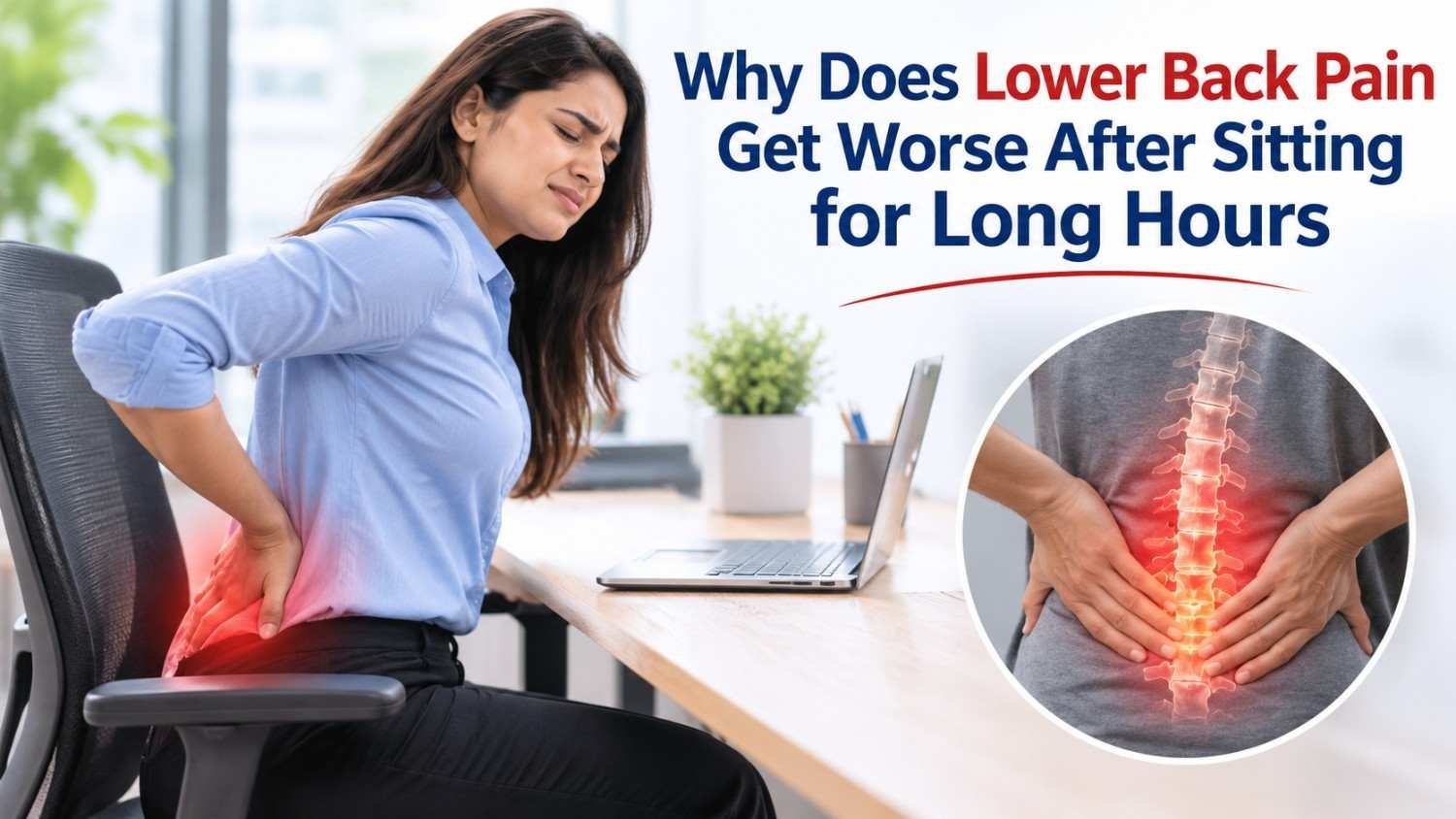
Why Does Lower Back Pain Get Worse After Sitting for Long Hours?
Lower Back Pain After Sitting often occurs because staying in one position for too long can increase discomfort, stiffness and muscle fatigue. Poor sitting habits, limited movement, weak supporting muscles or an existing back condition may also contribute. Sitting is not automatically harmful, but remaining still for hours can make symptoms more noticeable. If discomfort keeps returning, back pain physiotherapy in Delhi may help you understand the possible cause and develop a suitable recovery plan.
What Happens to Your Lower Back When You Sit for Hours?
The lumbar spine is a lower back area that acts as a foundation for your upper body and allows you to move through the help of muscles, ligaments, joints, and discs. Prolonged sitting, particularly in an uncomfortable posture, limits movement and causes strain on some areas of the body.
An optimal sitting posture is not the same for everyone. You should rather take a comfortable sitting posture and frequently alter it. The Lower Back Pain After Sitting is often described by a dull ache or stiffness when standing.
Common Causes of Lower Back Pain After Sitting
- Staying in One Position Too Long
A comfortable chair does not take the place of movement. It may cause stiffness in the back if someone spends hours sitting at his or her desk, in the car, or even on the couch. However, the feeling of stiffness in the back disappears after standing and moving around.
- Poor Sitting Posture
Bending toward the computer or sitting in an incorrect posture will make it hard for you to stay in an appropriate posture.
Your feet must be well placed on the floor, and your hips and knees should be at a relaxed angle and your computer screen at your eye level. It is important that you arrange your posture according to your body needs.
- Muscle Fatigue and Reduced Strength
The muscles of your back, abdominal area, and hips help in movement and support the stability of the trunk region. If these muscles are not constantly exercised, sitting for a long time can become uncomfortable.
In the lower back, muscle tightness can be caused by doing new things or exertion due to other illnesses. Posture might not always be the only reason behind it.
- Disc, Joint or Nerve Problems
There may be an existing problem in the spine like arthritis or pinched nerve that may cause pain in sitting position and in some activities.
This should be assessed properly, particularly when there is tingling sensation, numbness, and weakness. Pain is not a diagnosis per se.
- Recent Injury or Muscle Strain
The lifting of something that is too heavy, a sudden twist of the body, or engaging in physical activities beyond the body’s normal limit can put pressure on the muscles or ligaments. Back pain may also be caused by other ailments. According to NHS and Cleveland Clinic, there are many causes of back pain.
How to Reduce Discomfort While Working or Travelling
Small, consistent changes are often more practical than trying to maintain a perfect posture all day.
- Change positions regularly. Stand up, walk briefly or move gently throughout the day. A reminder every 30 minutes can help break up long sitting periods.
- Adjust your workstation. Support your feet, bring your screen closer and position your keyboard so your shoulders can relax.
- Use comfortable back support. A small cushion or rolled towel may help support your lower back’s natural curve.
- Stay active. Walking and normal daily activities can support recovery. Avoid prolonged bed rest unless a clinician advises otherwise.
- Try gentle heat. A wrapped heat pack may ease muscle tightness. Protect your skin from excessive heat.
- Increase activity gradually. Stop exercises that clearly worsen your symptoms and seek professional guidance if you are unsure what is suitable.
Should this Lower Back Pain After Sitting continue to interfere with your daily tasks, including work, driving, and sleep, it is important for you to determine the duration of your backache, and what helps relieve your pain.
Can Physiotherapy Help?
Physiotherapy treatment includes your posture, symptoms, muscle power, activities and past medical history. Treatment includes special exercise, guidance of movements, muscle building and modifying your working environment.
Pain in back physiotherapy in Delhi will be a great option for people who want to have local care about the possibility of treatment. If you have difficulty traveling, ask for physiotherapy at home in Delhi.
Home visit helps your physician to see your normal chair, workplace and movements. It cannot replace medical examination if there are any signs present.
Phywell Physiotherapy can appear in the local content, but it is essential to ensure that you verify the qualifications, services, and suitability of the provider separately before deciding to receive any treatment. Phywell Physiotherapy is not medical literature and cannot be considered as an alternative to a certified health professional.
If you compare various providers, be sure to find out about the procedure of assessment, the available treatment options for your disease, and how your progress will be tracked. Be aware that any guarantee of treatment cannot be given.
When Should You Seek Medical Advice?
If you have continued pain for several weeks, recurring pain, restriction on your daily activities, or if the pain is worse at night, or with unexpected weight loss, make an appointment with a doctor.
Consult a doctor immediately in case you have very acute pain that comes out of nowhere and rapidly increases, or in case you have developed fever, chills, or generally feel sick.
Get immediate emergency help in case you have back pain along with a problem of inability to control your bowel movements or urination, numbness in the areas around genitals and anus, or any signs of weakness or numbness in both of your legs.
A Practical Next Step
Lower Back Pain After Sitting is common, but when it becomes a recurring problem, it deserves attention rather than guesswork. Change positions regularly, stay active within your limits, and consult a qualified professional when necessary.
Phywell Physiotherapy encourages you to make informed decisions, ask questions, and prioritise appropriate care. For more information about back pain physiotherapy in Delhi or physiotherapy at home in Delhi, visit our website to explore suitable care options.
The more you understand the possible causes of your discomfort, the better equipped you will be to make informed decisions about your recovery. Contact us today to learn more about our physiotherapy services and take the next step towards managing your back pain.









Leave a Reply