
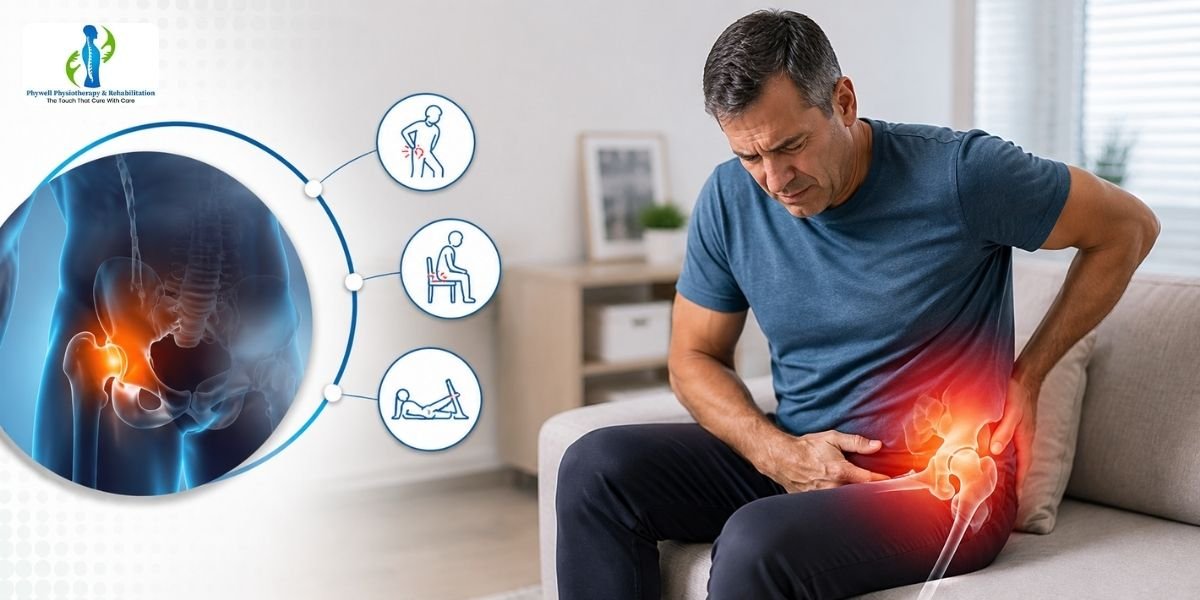
Hip Pain After 40: Common Causes, Symptoms & Physiotherapy Solutions
Phywell Physiotherapy Team2026-07-16T12:54:02+00:00Many people notice that their body starts responding differently after the age of 40. A long walk that once felt easy may leave you feeling stiff, sitting for long hours may create discomfort, or climbing stairs may not feel as effortless as before. One of the common concerns people experience during this stage of life is Hip Pain After 40.
Hip discomfort does not always mean something serious is wrong, but ignoring it for months can make everyday movements harder. The hip is responsible for supporting your body weight and helping you walk, bend, and stay balanced. When the muscles, joints, or surrounding tissues are affected, even simple activities can become uncomfortable.
Many people look for the Best Chiropractor in Delhi when they experience hip-related discomfort, but the first step should always be understanding the actual reason behind the pain. At Phywell Physiotherapy, professionals focus on identifying the source of the problem and creating a treatment plan that matches each person’s condition and lifestyle.
With the right guidance, many people can improve movement, build strength, and return to a more active routine.
Why Does Hip Pain Become More Common After 40?
The hip joint works every day — whether you are walking, standing, exercising, or simply changing positions while sitting. Over time, repeated stress, reduced activity, previous injuries, and changes in muscle strength can affect how smoothly the joint moves.
After 40, some people experience middle-age hip discomfort because the muscles supporting the hip may become weaker or tighter. Reduced flexibility can also change the way a person walks or performs daily movements.
Some common reasons behind hip discomfort include:
- Less physical activity over the years
- Weakness in muscles around the hip
- Previous injuries that were never fully recovered
- Poor posture or movement habits
- Natural changes in joints with age
The good thing is that age alone does not decide your mobility. Regular movement, strength exercises, and proper care can help maintain healthy joints and support an active lifestyle.
Common Causes of Hip Pain After 40
Hip pain can happen for several reasons. Two people may feel pain in the same area but have completely different causes behind it. That is why proper assessment matters before starting any treatment.
Osteoarthritis and Hip Joint Changes
One of the common causes of hip discomfort after 40 is osteoarthritis. This happens when the protective cartilage inside the joint gradually becomes thinner, which may lead to discomfort and stiffness.
Some common osteoarthritis symptoms include:
- Stiffness after sitting for a long time
- Pain while walking or climbing stairs
- Reduced hip movement
- Difficulty performing certain activities
Physiotherapy can help people manage these symptoms by improving strength, mobility, and movement patterns.
Hip Bursitis
Small fluid-filled sacs called bursae help reduce friction around joints. When these become irritated, it can cause a condition known as hip bursitis.
People with hip bursitis may notice:
- Pain on the outside of the hip
- Discomfort while sleeping on one side
- Pain during walking or standing for longer periods
This type of pain can sometimes be linked with repetitive activities, muscle imbalance, or increased pressure around the hip.
Hip Tendonitis
Tendons connect muscles to bones, and irritation in these tissues can lead to hip tendonitis. It often develops when the tissues experience repeated stress without enough recovery.
Common signs include:
- Pain during certain movements
- Tenderness around the hip area
- Reduced strength during activities
A structured physiotherapy program can help improve muscle support and reduce unnecessary stress on the hip.
Muscle Weakness Around the Hip
The muscles around your hips act like a support system. When they become weak, your body may start depending more on other muscles, which can affect movement.
Muscle weakness around the hip may contribute to:
- Poor balance
- Difficulty walking comfortably
- Increased strain on joints
- Reduced confidence during movement
Strengthening these muscles is often an important part of improving hip function.
Symptoms of Hip Problems You Should Pay Attention To
Not every ache needs immediate concern, but ongoing discomfort should not be ignored.
Some common signs include:
- Hip joint stiffness after rest
- Groin pain while moving
- Lateral hip pain (pain on the outer side of the hip)
- Difficulty walking normally
- Reduced flexibility
- Pain while getting up from a chair
- Chronic joint pain that keeps returning
If hip discomfort starts affecting your daily routine, it is worth getting professional advice instead of simply waiting for it to disappear.
How Physiotherapy Helps With Hip Pain After 40
Many people assume physiotherapy is only about exercises, but modern physiotherapy involves much more than that. A good treatment plan begins with understanding your movement, lifestyle, and the reason behind your discomfort.
At Phywell Physiotherapy, treatment focuses on personalised care rather than a one-size-fits-all approach.
A physiotherapy plan may include:
Detailed Movement Assessment
A physiotherapist checks your posture, walking style, flexibility, and muscle strength to understand what may be causing the problem.
Sometimes, the pain is not only coming from the hip itself. The way you walk, sit, or move can also put extra stress on the area.
Strength and Mobility Exercises
The right exercises can help improve:
- Hip strength
- Flexibility
- Balance
- Joint stability
The goal is not just temporary joint pain relief but helping you move better in daily life.
Manual Therapy and Movement Techniques
Depending on your condition, a physiotherapist may use hands-on techniques along with exercises to improve movement and comfort.
A personalised physiotherapy approach based on evidence-based methods can support better recovery and improved flexibility.
Simple Ways to Keep Your Hips Healthy After 40
Taking care of your hips does not always require major lifestyle changes. Small daily habits can make a difference.
Keep Moving: Long periods of sitting can increase stiffness. Regular walking and gentle movement help maintain healthy mobility.
Build Strength: Strong muscles support your joints and make everyday activities easier.
Improve Flexibility: Stretching exercises can help maintain comfortable movement and reduce tightness.
Listen to Your Body: Pain that continues or keeps returning is a signal worth checking.
These habits support active aging and can help maintain better joint function over time.
When Should You Visit a Physiotherapist?
Many people delay treatment because they think hip discomfort is just part of getting older. While some changes are normal, ongoing pain deserves attention.
Consider consulting a professional if:
- Pain continues for several weeks
- Walking becomes uncomfortable
- Your movement becomes limited
- Pain affects sleep or daily activities
Finding the Best physiotherapy centre in Delhi can help you get proper guidance and a treatment plan based on your specific needs.
Why Choosing the Right Physiotherapy Clinic Matters
The right healthcare support can make a major difference in recovery. A good physiotherapy clinic does not only focus on reducing pain; it helps you understand your body and improve how you move.
Phywell Physiotherapy works with individuals to develop practical rehabilitation plans focused on mobility, strength, and long-term improvement.
For people searching for a chiropractor, it is also important to choose professionals who first understand the underlying cause of discomfort rather than only focusing on temporary relief.
The right approach combines assessment, personalized care, and consistent effort.
Hip Pain After 40: Taking the Right Steps Toward Better Mobility
Experiencing Hip Pain After 40 does not mean you have to give up the activities you love. With timely attention, the right exercises, and proper guidance, many people can improve their mobility and get back to a more comfortable routine.
Your hips support almost every movement you make, from walking and climbing stairs to staying active with your family and daily tasks. Taking care of them today can help you maintain better movement and independence in the years ahead.
If hip discomfort is making your daily activities difficult, contact Phywell Physiotherapy for expert guidance and personalised care. Their experienced team can assess your condition, understand the root cause of your discomfort, and create a rehabilitation plan designed around your needs and goals.
Better movement starts with the right support. Get in touch with Phywell Physiotherapy today and take the first step toward stronger, healthier, and more confident movement.












Leave a Reply