
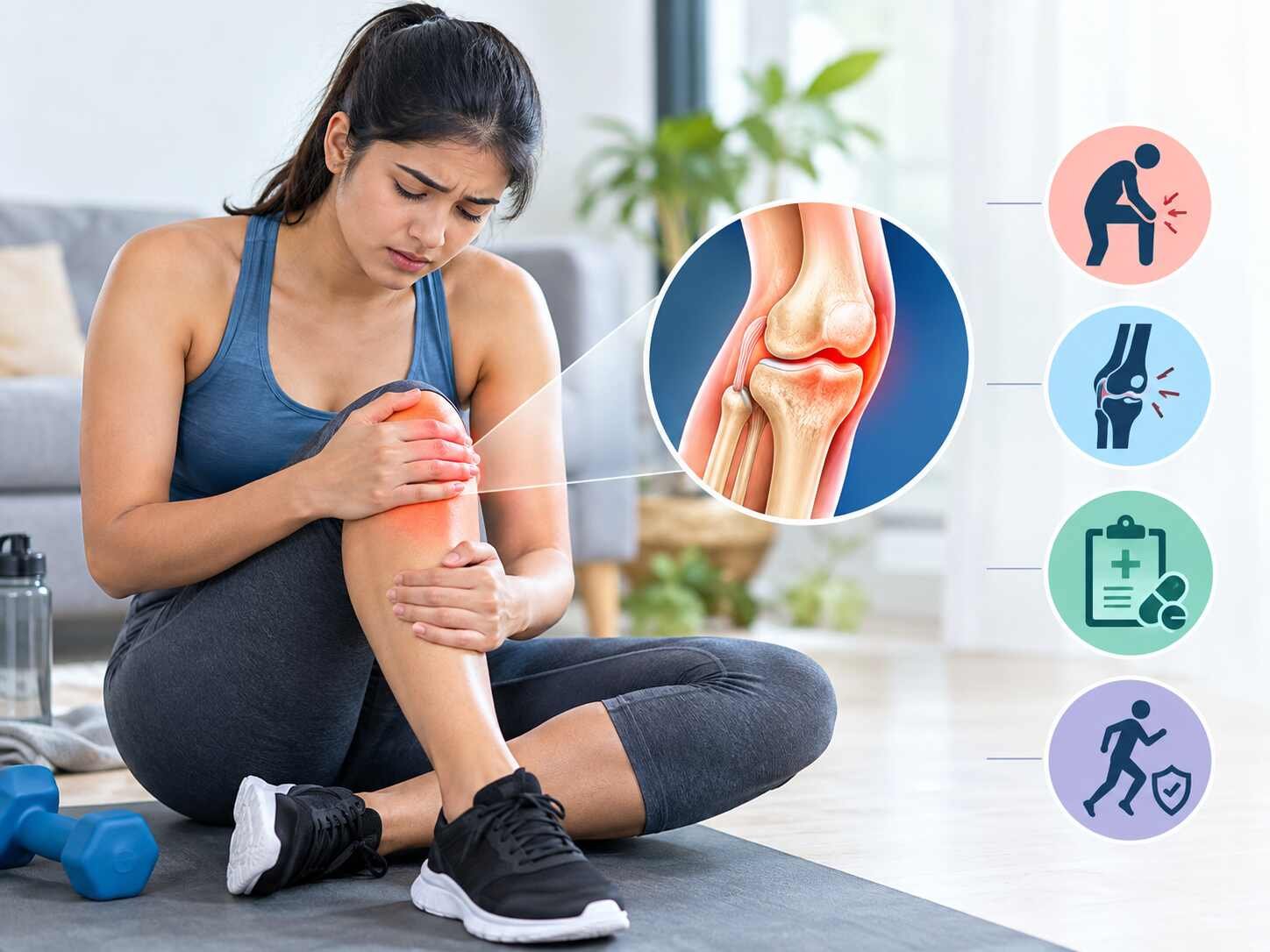
Knee Pain in Young Adults: Causes, Symptoms, Treatment & Prevention
Phywell Physiotherapy Team2026-09-15T11:04:34+00:00Knee pain is not only an older-age problem. Knee pain in young adults can develop because of sports injuries, overuse, muscle weakness, poor movement patterns, or conditions affecting the knee joint. If you are looking for knee pain treatment in Delhi, the first step should be understanding what is actually causing the pain instead of simply treating the symptom.
Whether you experience discomfort after a workout, pain while climbing stairs, or recurring stiffness during everyday activities, the right approach depends on the cause. Professional assessment and appropriate rehabilitation can help you understand the problem and plan a safer recovery.
Is Knee Pain Common in Young Adults?
Young adults often put considerable demand on their knees through running, gym workouts, sports, cycling, jumping, or other physical activities. At the same time, long periods of sitting and insufficient strength training can affect movement and muscle balance.
One common condition in this age group is Patellofemoral pain syndrome, also known as Runner’s knee. It causes pain around or behind the kneecap and can become more noticeable while running, squatting, or using stairs. Mayo Clinic notes that this condition commonly affects teenagers and young adults.
That does not mean every painful knee has the same explanation. The knee is a complex joint where bones, cartilage, ligaments, tendons and muscles work together. A proper assessment matters.
Also Read: Slip Disc vs Sciatica: Symptoms, Causes, Differences & Treatment Options
Common Causes of Knee Pain in Young Adults
There are several possible causes of knee pain, and the symptoms can vary from one person to another.
1. Overuse and Repetitive Activity
Suddenly increasing your running distance, gym routine, sports training, or jumping exercises can place extra stress on the knee. Overuse may irritate tissues around the joint and contribute to pain.
For example, someone who normally runs twice a week and suddenly starts training every day may notice knee pain after exercise. The solution is not necessarily to stop all movement. Instead, the activity level may need adjustment while strength, technique and recovery are addressed.
2. Muscle Weakness and Poor Movement Control
Strong and well-coordinated muscles help support the knee during movement. Weakness around the hips, thighs or legs can affect how the knee moves during activities such as squatting, running and landing.
Mayo Clinic identifies muscle weakness or imbalance as a factor associated with patellofemoral pain.
3. Sports Injuries
Sports involving sudden stops, pivots, jumping or changes in direction can increase the risk of injury. An ACL injury, for example, can occur when someone suddenly changes direction, lands awkwardly or stops quickly. Symptoms may include a popping sensation, rapid swelling, pain, reduced range of motion and instability.
A Meniscus tear can also occur when the knee twists while bearing weight. The meniscus contains cartilage that helps absorb forces between the thighbone and shinbone.
4. Tendon and Bursa Problems
Patellar tendinopathy affects the tendon connecting the kneecap to the shinbone and can occur with repeated running or jumping. Tendinitis can cause irritation and inflammation around a tendon.
Bursitis is another possible cause. The bursae are small fluid-filled sacs that help reduce friction around the joint. Irritation can cause pain and swelling, particularly with activities that repeatedly put pressure on the knee.
5. Knee Conditions That Need Professional Assessment
Although Knee osteoarthritis is more commonly associated with increasing age, young adults can still experience knee problems for different reasons, particularly when there is a history of injury or another underlying condition.
Persistent or unexplained chronic knee pain should not be ignored simply because you are young. Recurring symptoms deserve a professional assessment rather than repeated self-treatment.
Knee Pain Symptoms You Should Pay Attention To
Knee pain symptoms can differ depending on the underlying problem. You may notice:
- Pain around or behind the kneecap
- Swelling
- Stiffness
- Tenderness
- Weakness or instability
- Difficulty bending or straightening the knee
- Pain while walking
- Pain while climbing stairs
- Pain during squatting
- Pain after exercise
- A popping or clicking sensation
- A feeling that the knee may give way
Mayo Clinic lists swelling, stiffness, weakness, instability and difficulty fully straightening the knee among symptoms that may accompany knee pain.
A sudden knee pain episode following a twist, fall, collision or sports movement deserves particular attention, especially when swelling develops quickly.
What Does Knee Pain in Your 20s or 30s Mean?
Experiencing knee pain in your 20s does not automatically mean you have serious joint damage. In many cases, activity-related problems, muscle weakness, movement patterns or minor injuries may contribute.
Similarly, knee pain in your 30s can have many possible causes. Previous injuries, sports activity, repetitive loading and changes in physical activity can all influence symptoms.
Age alone cannot identify the cause. The location of pain, activity that triggers it, previous injuries, swelling, movement limitations and physical examination provide more useful information.
How Is Knee Pain Diagnosed?
A healthcare professional usually considers your symptoms, medical history and physical findings before deciding whether further investigation is necessary.
The assessment may include checking:
- Knee movement and flexibility
- Strength of surrounding muscles
- Joint stability
- Walking and movement patterns
- Tenderness or swelling
- Previous injuries
- Activities that increase or reduce pain
Imaging is not automatically necessary for every case. Depending on the suspected problem, a healthcare professional may recommend an X-ray or MRI. Mayo Clinic explains that X-rays are useful for viewing bones, while MRI can provide detailed images of soft tissues such as ligaments and cartilage.
Knee Pain Treatment: What Can Help?
The right knee pain treatment depends on the cause, severity and individual needs. There is no single exercise or treatment that works for every knee problem.
For some activity-related conditions, temporarily reducing movements that increase pain can help. Rehabilitation may then focus on improving strength, flexibility, movement control and functional ability.
Physiotherapy can be an important part of knee injury recovery. A physiotherapist may create an exercise plan based on your symptoms and physical assessment. Treatment can focus on restoring mobility, improving range of motion, strengthening supporting muscles, and gradually returning to normal activities.
If you are researching best physiotherapy in Delhi, look beyond marketing claims. Check whether the clinic provides proper assessment, individualized rehabilitation and clear guidance about your condition and recovery.
For patients in Delhi, Phywell Physiotherapy can also be found through its Google Business Profile location when checking the clinic’s local presence and available information.
When Should You Seek Professional Help?
You should not simply push through knee pain when symptoms are severe, persistent or getting worse.
Seek prompt medical attention if you cannot put weight on the knee, the knee becomes significantly swollen, you cannot move or straighten it properly, it changes shape, or severe pain follows an injury. Fever with a hot, red and painful knee also requires urgent medical assessment because infection can be a serious cause.
If pain continues for weeks or repeatedly returns, professional evaluation can help identify the underlying problem and prevent you from guessing your way through recovery.
How to Prevent Knee Pain in Young Adults
Prevention does not consist of stopping exercise but rather, in some cases, proper physical exercise helps retain muscle strength and functionality. The approach should be intelligent.
Do not jump suddenly into a heavy workout routine; introduce it gradually, warm up before tough exercises, use correct technique and perform exercises to build muscles around your knee.
According to the Mayo Clinic, you should build muscles of your legs and hips, warm up, stretch, do exercises gradually and wear appropriate shoes for your activity.
Also take into account the process of recovery from your workout; your body is not like a machine with no warranty period.
Simple Takeaway for Better Knee Health
Young adults experience knee pain due to a myriad of factors including overuse or weakness of muscles. It would also include other injuries sustained during exercise and knee conditions. Injuries and symptoms like stiffness, swelling, instability, and inability to walk, among others, should never be ignored just because someone is young.
It is important to first find out what is causing the pain and then manage the aggravating activities and also have a rehabilitation process. If you are thinking about choosing treatment for knee pain in Delhi, then choose the one which will suit you depending on the problem.
In case you want the best physiotherapy in Delhi, then there will be a physiotherapist who can assess your movements, strength and also suggest how you can rehabilitate yourself. At Phywell Physiotherapy, we strive to help our clients recover by ensuring that their movements improve. We do not aim at making the pain go away within a day. This means that we strive to ensure that our clients move and do things again with confidence. Please feel free to contact us if you need more information.
Frequently Asked Questions
Yes. Overuse, sports injuries, muscle weakness and conditions such as patellofemoral pain syndrome can cause knee pain in young adults.
Common causes include overuse, muscle weakness, sports injuries, tendon problems, bursitis, meniscus tears and ligament injuries.
Yes. Repeated running, jumping or other high-impact activities can place stress on the knee and may contribute to pain or inflammation.
Runner’s knee is another name commonly used for patellofemoral pain syndrome, which causes pain around or behind the kneecap.
Seek professional assessment if pain is severe, persistent, associated with significant swelling or instability, or makes it difficult to walk or move the knee.
Yes. Depending on the cause, physiotherapy may focus on improving strength, mobility, movement control and range of motion.
Gradual exercise progression, proper warm-ups, strength training and avoiding excessive overuse can help reduce the risk of knee problems.
No. Knee pain can result from several conditions, including temporary overuse or irritation. A proper assessment can help identify the likely cause.



Leave a Reply