
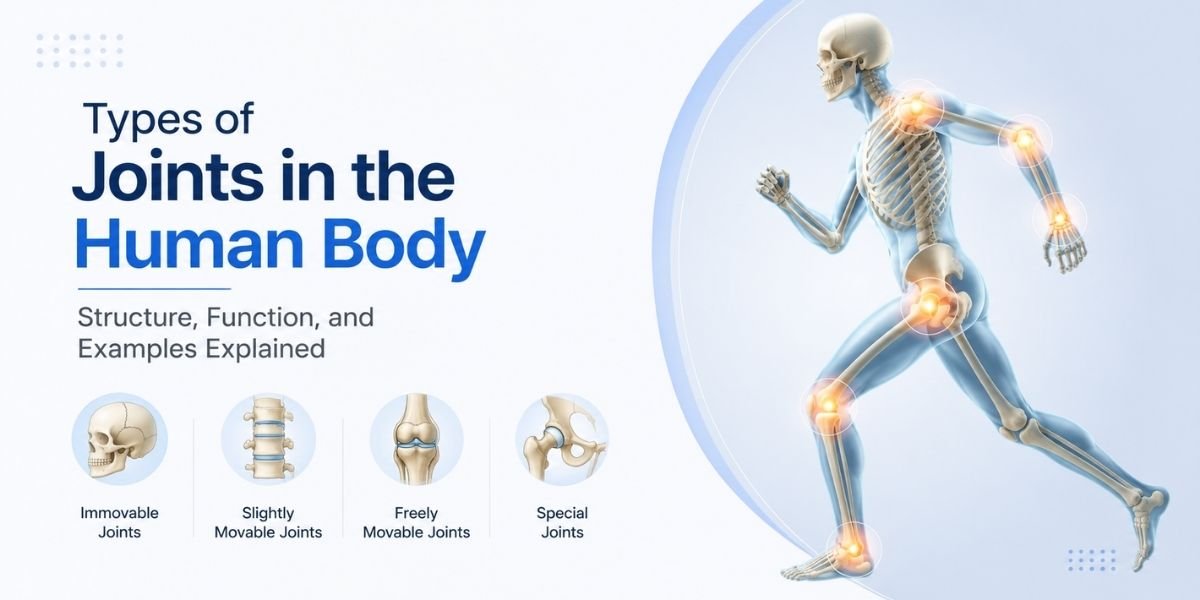
Types of Joints in Human Body: Structure, Function, and Examples Explained
Phywell Physiotherapy Team2026-07-13T10:04:32+00:00The human body works like a perfectly coordinated machine, and joints are the connectors that keep everything moving smoothly. From waving your hand to climbing stairs or simply turning your neck to check who called your name, every movement depends on joints. Without them, your skeleton would act more like a statue than a living system.
Many people only think about joints when pain starts. Suddenly, the knee sounds like a packet of chips, the shoulder clicks during workouts, and the back refuses to cooperate on Monday mornings. That is exactly why understanding the joints in human body matters. Proper joint care supports mobility, flexibility, posture, and long-term physical comfort.
If you already struggle with stiffness, sports injuries, or posture-related discomfort, consulting a Chiropractor or visiting Phywell Physiotherapy, known as the Best physiotherapy centre in delhi, can help improve movement stability and pain-free motion through personalized rehabilitation programs.
What Are Joints in the Human Body?
Joints are places where two or more bones meet. They form the foundation of movement within the human skeletal system. Along with bones, cartilage, ligaments, tendons, and synovial fluid, joints create a flexible and stable support system for the body.
The primary function of joints includes:
- Supporting body movement
- Providing structural stability
- Allowing flexibility and coordination
- Reducing friction between bones
- Helping maintain posture and balance
According to the Cleveland Clinic, joints are classified based on their structure and movement ability. Some joints move freely, while others remain fixed for protection and support.
Structure of Joints
Understanding the structure of joints makes it easier to understand why some joints move like a smooth door hinge while others barely move at all.
A typical joint contains:
Bones: Bones form the framework of the skeletal system. Examples include the femur, tibia, humerus, radius bone, and ulna bone.
Cartilage: Cartilage tissue covers bone surfaces and reduces friction during movement. It also absorbs shock, especially in weight-bearing joints like the knee and hip.
Ligaments: Ligaments connect bones together and improve joint strength. The ligament function in joints mainly involves stability and injury prevention.
Tendons: Tendons connect muscles to bones and assist movement efficiency.
Synovial Fluid: This slippery fluid lubricates movable joints and supports smooth movement. Healthy joint lubrication synovial fluid helps reduce wear and tear.
Joint Capsule and Synovial Membrane
The joint capsule surrounds synovial joints, while the synovial membrane produces lubrication fluid for better flexibility of human body joints.
The National Institute of Arthritis and Musculoskeletal and Skin Diseases (NIAMS) explains that these tissues work together to support physical mobility, natural body balance, and movement stability.
Types of Joints in Human Body
There are three major types of joints in human body based on structure and movement.
1. Fibrous Joints
Fibrous joints connect bones using dense connective tissue. These joints allow little or no movement.
Examples of Fibrous Joints
- Fixed joints in skull
- Teeth attached to jaw bones
- Tibia and fibula connection
The best example is the skull. The bones stay tightly connected to protect the brain. Imagine if skull bones moved while chewing food. Headaches would become a full-time career.
Fibrous joints mainly provide structural support and skeletal strength.
2. Cartilaginous Joints
Cartilaginous joints connect bones through cartilage. They allow slight movement and improve flexibility.
Examples
- Vertebral column joints
- Pelvis connection
- Rib cage attachments
These joints support shock absorption and body alignment. The spine depends heavily on cartilaginous joints for flexibility improvement and everyday activity support.
3. Synovial Joints
Synovial joints are the most common and movable joints in human body. They contain a joint cavity filled with synovial fluid.
These joints allow smooth movement, athletic performance, and functional mobility.
Types of Human Joints Under Synovial Category
Ball and Socket Joint
The rounded head of one bone fits into another bone’s socket.
Examples
- Shoulder joint
- Hip joint
The ball and socket joint allows movement in multiple directions. Shoulder joint structure supports activities like throwing, lifting, and rotating.
The hip joint movement also supports walking, running, and posture control.
Hinge Joint in Body
Hinge joints move in one direction, similar to a door hinge.
Examples
- Knee joint
- Elbow joint
The hinge joint in body mainly supports bending and straightening movements. The knee joint anatomy includes ligaments, cartilage, and the femur-tibia connection that provides stability and flexibility.
The Cleveland Clinic Knee Joint Guide notes that the knee is the largest joint in the body and plays a major role in balance and movement.
Pivot Joint Example
Pivot joints allow rotational movement.
Example
- Neck joint between vertebrae
A pivot joint example includes the joint that helps you rotate your head left and right. It supports better coordination and movement efficiency.
Gliding Joint Function
Gliding joints contain flat surfaces that slide over one another.
Examples
- Wrist joint
- Ankle joint
The gliding joint function helps with subtle movements and flexibility. Wrist joint bones and ankle joint anatomy rely heavily on this motion for everyday tasks.
Saddle Joint
Saddle joints allow side-to-side and back-and-forth movement.
Example
- Thumb joint
Without this joint, holding a phone or opening a pickle jar would feel strangely impossible.
Condyloid Joint
These joints allow movement in multiple directions but prevent full rotation.
Example
- Wrist connection
They contribute to physical independence and healthy bone connection during daily activities.
Human Body Joints Name and Their Functions
Here are some common human body joints name examples with their primary roles:
| Body Joints Name | Main Function |
| Shoulder Joint | Wide range of arm movement |
| Elbow Joint | Bending and extension |
| Knee Joint | Walking and stability |
| Hip Joint | Weight support and mobility |
| Wrist Joint | Hand flexibility |
| Ankle Joint | Balance and movement |
| Spine Joints | Flexibility and posture |
These body joints name examples highlight how the musculoskeletal system supports active lifestyle habits and smooth movement.
Common Joint Problems
Joint health affects overall physical well-being. Poor posture, aging, injuries, obesity, and repetitive movement can damage joints over time.
Common Joint Pain Causes
- Arthritis in joints
- Ligament injuries
- Cartilage damage
- Poor posture
- Sports injuries
- Inflammation
Conditions like osteoarthritis and rheumatoid arthritis commonly affect the skeletal system joints and reduce range of motion in joints.
Early rehabilitation improves recovery and prevents long-term complications. Many people now consult a Chiropractor in delhi or seek care at Phywell Physiotherapy, recognized as the Best physiotherapy centre, for posture correction, joint pain causes management, rehabilitation progress, and pain relief support.
How to Keep Your Joints Healthy
Healthy joints improve physical comfort and support healthy aging.
Here are practical ways to protect them:
- Stay physically active
- Maintain healthy body weight
- Improve posture
- Stretch regularly
- Strengthen supporting muscles
- Drink enough water
- Avoid repetitive stress injuries
Low-impact exercises like walking, yoga, and swimming improve joint protection and flexibility improvement without putting excess pressure on connective tissue.
Why Understanding Human Body Joints Matters
Understanding the types of joints in human body helps you appreciate how the human skeletal system structure supports movement, balance, and physical independence. From fixed joints in skull to highly flexible synovial joints, every joint serves a specific purpose in the human bone connection system.
Healthy joints support pain-free motion, better coordination, and an active lifestyle. Ignoring joint discomfort often leads to reduced mobility and long-term complications. Whether you want to improve posture, recover from injury, or increase flexibility, professional guidance from a Chiropractor or the Best physiotherapy centre can make a meaningful difference.
Reliable medical sources like Cleveland Clinic and NIAMS continue to emphasize that healthy joints are essential for movement, stability, and long-term quality of life.
If you are struggling with joint pain, stiffness, posture imbalance, sports injuries, or reduced mobility, the expert team at Phywell Physiotherapy is here to help. From advanced rehabilitation programs and chiropractic care to personalized physiotherapy sessions, every treatment plan focuses on improving movement efficiency, pain relief, and long-term recovery. Whether you need clinic visits or home physiotherapy support, contact Phywell Physiotherapy today and take the first step toward better mobility, stronger joints, and a healthier active lifestyle.









Leave a Reply