
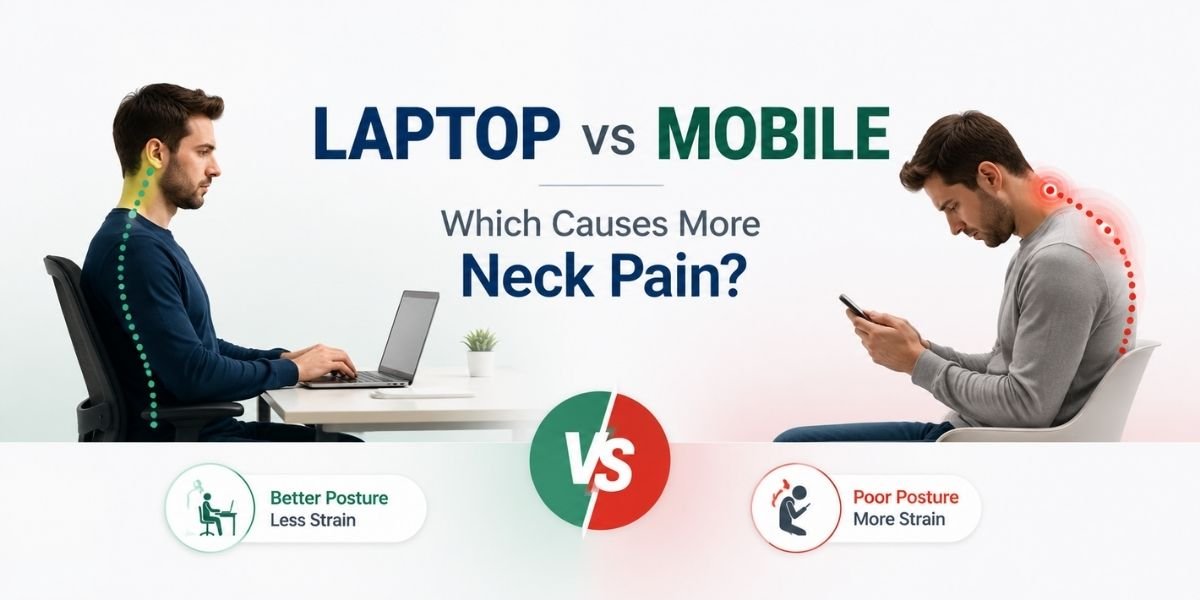
Laptop vs Mobile: Which Causes More Neck Pain?
Phywell Physiotherapy Team2026-07-13T10:04:31+00:00We all blame Monday mornings for discomfort, but most of the time, the real culprit sits right in front of us, screens. Whether it’s a laptop or a smartphone, long hours of use can lead to neck pain due to a laptop, stiffness, and what experts now casually call “tech neck.”
If you already feel tightness or strain, professional support like neck pain physiotherapy in delhi can help restore posture, reduce pain, and improve mobility. Many people also combine this with back pain physiotherapy in Delhi for better full-spine recovery.
The real question is simple: Does your laptop hurt your neck more than your mobile? Let’s break it down using logic, anatomy, and real-world behaviour, not guesswork.
Why Screen Use Affects Your Neck So Much
Your neck is not designed for long hours of forward bending. The cervical spine, made up of cervical vertebrae, supports your head, which can weigh around 4–5 kg. When you tilt forward, that load increases dramatically.
This posture stress affects:
- Neck muscles
- Trapezius muscle
- Sternocleidomastoid muscle
- Intervertebral disc
- Shoulder joint
Over time, this leads to cervical spine stress, muscle fatigue, and reduced spinal alignment.
According to research published by Harvard Health, forward head posture increases strain on the neck and upper back, contributing to chronic discomfort over time.
Also Read: Why Does My Lower Back Hurt When I Wake Up? Causes and Fixes
Laptop vs Mobile: The Posture Battle
Let’s compare both devices in real life, not theory.
Laptop and Neck Pain
A laptop usually sits on a desk or work desk, which helps stability. However, the problem starts when:
- The monitor is too low
- You don’t use an ergonomic chair
- You slouch forward for long hours
- Your keyboard and mouse position is incorrect
This leads to laptop neck pain, upper back and neck pain, and poor posture neck pain.
The biggest issue?
People often work for hours in a fixed posture. That creates continuous neck muscle strain and cervical pain from screen time.
Yes, neck pain due to a laptop is very real, but mostly because of bad setup, not the device itself.
Mobile and Neck Pain
Now let’s talk about the real troublemaker: the smartphone.
Unlike laptops, mobile phones encourage constant downward bending. This leads to:
- Forward head posture
- Mobile neck pain
- Neck strain from mobile
- Screen time neck pain
- Digital device neck pain
When you scroll Instagram or binge-watch videos, your neck stays flexed for long periods. That creates continuous pressure on the cervical spine and surrounding muscles.
The American Physical Therapy Association has highlighted that prolonged phone use is strongly linked to “text neck syndrome,” especially in young adults.
So yes, your phone may quietly be doing more damage than your laptop.
So Who Wins (or Loses)?
If we compare both:
- Laptop = static posture, long hours
- Mobile = extreme neck bending, frequent use
Verdict: Mobile usually causes worse posture damage, but laptop causes longer-duration strain
In simple words:
- Laptop = marathon strain
- Mobile = repeated micro-injuries
Both contribute to neck stiffness causes, reduced mobility, and long-term discomfort if ignored.
Common Symptoms You Should Not Ignore
Whether it’s neck discomfort while using laptop or mobile overuse, watch for:
- Neck stiffness causes increasing pain
- Reduced neck movement
- Upper back tightness
- Headaches
- Shoulder tension
- Tingling in arms
- Poor posture during sitting
These are early tech neck warning signs.
If ignored, they can affect your musculoskeletal system, leading to long-term posture imbalance.
When to Consider Physiotherapy
If your symptoms continue, early treatment helps.
Visiting neck pain physiotherapy in delhi can improve:
- Posture correction for neck pain
- Muscle relaxation
- Pain-free movement
- Better sitting posture
- Improved spinal health
Clinics offering back pain physiotherapy in delhi also address related spinal issues, because neck and back health work together.
Midway through treatment, professionals often guide patients to improve their ergonomic lifestyle, including workstation setup and screen habits.
Simple Ergonomic Fixes That Actually Work
You don’t need expensive equipment to reduce pain. Start with small changes:
For Laptop Users
- Use a laptop stand to raise screen height
- Keep eye level monitor alignment
- Use an ergonomic chair
- Maintain proper keyboard and mouse positioning
- Keep feet flat on the floor
For Mobile Users
- Hold phone at eye level
- Reduce continuous scrolling
- Take screen breaks every 20–30 minutes
- Avoid lying down while using mobile
These habits improve comfortable working posture and reduce long-term strain.
Exercises That Help Neck Pain Relief
Simple movements improve recovery and prevent stiffness:
- Neck rotations
- Shoulder rolls
- Chin tucks
- Stretching upper trapezius
- Foam roller exercises
Physiotherapists often include yoga, pilates, and neck strengthening exercises to improve physical well-being and posture awareness.
Expert Insight: Why Early Action Matters
Ignoring posture problems leads to:
- Chronic cervical pain
- Reduced mobility
- Muscle imbalance
- Long-term spinal issues
- Decreased productivity
The musculoskeletal system adapts to poor posture over time. That’s why early correction matters.
Healthcare experts from orthopedics and physiotherapy fields strongly recommend early intervention for digital lifestyle-related pain conditions.
How to Prevent Tech Neck in Daily Life
To maintain long-term digital wellness, follow these habits:
- Maintain screen time balance
- Adjust workstation ergonomics
- Take micro-breaks
- Stretch during work hours
- Keep posture awareness active
- Avoid slouching on sofa while using devices
Even small improvements lead to better pain-free movement and reduced muscle tension.
What Your Neck Pain Is Really Trying to Tell You
So, what causes more neck pain, laptop or mobile?
Both play their part, but in different ways. The laptop builds long-duration strain, while the mobile creates constant forward head pressure. Together, they form the modern lifestyle problem called tech neck.
The good news? You can fix most of it with awareness, posture correction, and timely physiotherapy support.
If you are already dealing with stiffness, discomfort, or neck pain due to a laptop, don’t ignore it. Professional help like neck pain physiotherapy in delhi can improve recovery and restore proper alignment. In more complex cases, combining it with back pain physiotherapy in delhi gives better results for full spinal health.
Your neck was designed for movement, not endless scrolling or hunched typing. Treat it well, and it will return the favor.
Need expert help with neck or back pain?
Contact Phywell Physiotherapy today and take the first step toward a pain-free life.



Leave a Reply